
Skip to content

Projects

GPS COLLARING OF BROWN BEARS: Towards coexistence

The aim is to understand how bears use space in order to reduce conflicts between bears and people.

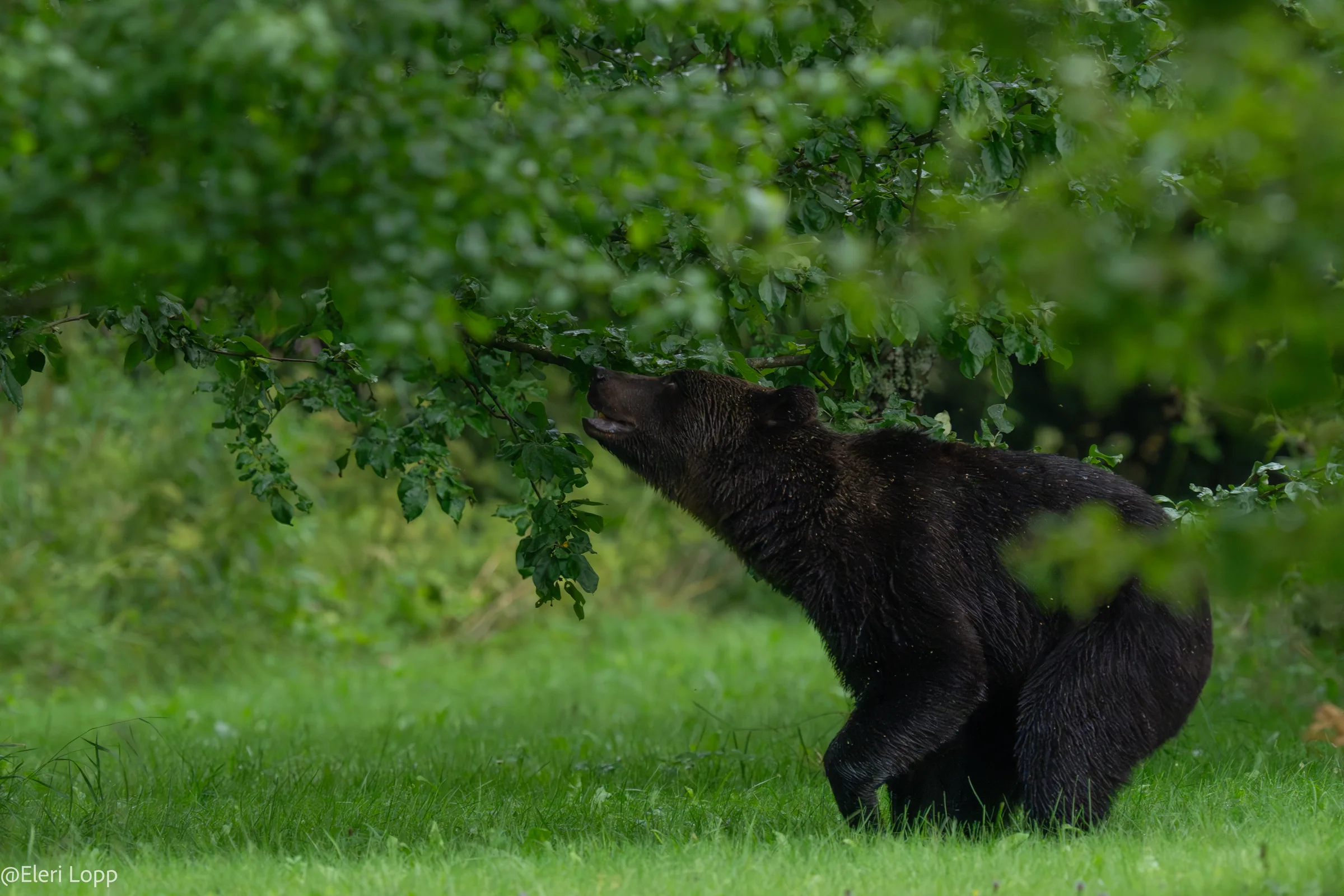
A brown bear stands on its hind legs and reaches towards leaves on a tree.

Brown bears are among the most charismatic inhabitants of Estonia’s forests, yet much remains unknown about them. We are beginning to address gaps in practical knowledge by studying how bears use space in Estonia.

Estonia is unusual in that its protected areas are relatively small compared with those elsewhere in the world, while its bear population is relatively large in relation to the human population. Bears and people therefore inevitably have to share space — in this case, Estonia — even though the brown bear is a predator that generally avoids people. Bear space use has been studied in other parts of the world, but these studies often concern small populations in landscapes that differ substantially from Estonia. We therefore regularly find bears in places in Estonia that research conducted elsewhere would suggest are unsuitable for them.

Sharing space naturally creates problems. Many can be prevented relatively easily, for example by installing electric fencing around apiaries, but detailed local data on bear space use is often needed to develop effective solutions. Such data could support specific recommendations, including how far silage bales should be placed from forest cover or where hiking trails could be located to reduce disturbance to bears and improve human safety. The study will also provide information about the home-range size, daily movement distances and habitat selection of the tracked bears, among other factors.

The project plans to use telemetry to study the habitat use of 5–10 bears. This will show how often, when and under what conditions bears approach areas used by people in Estonia. The initially planned number of bears fitted with tracking collars is smaller than the ideal sample size, but it is sufficient for an initial overview.

A better understanding of bears and their behaviour can support more informed choices and successful coexistence.

To carry out this work, we need your support. Below, you can donate by card through Stripe or directly by bank transfer to EE404204278641933500 (COOP PANK).
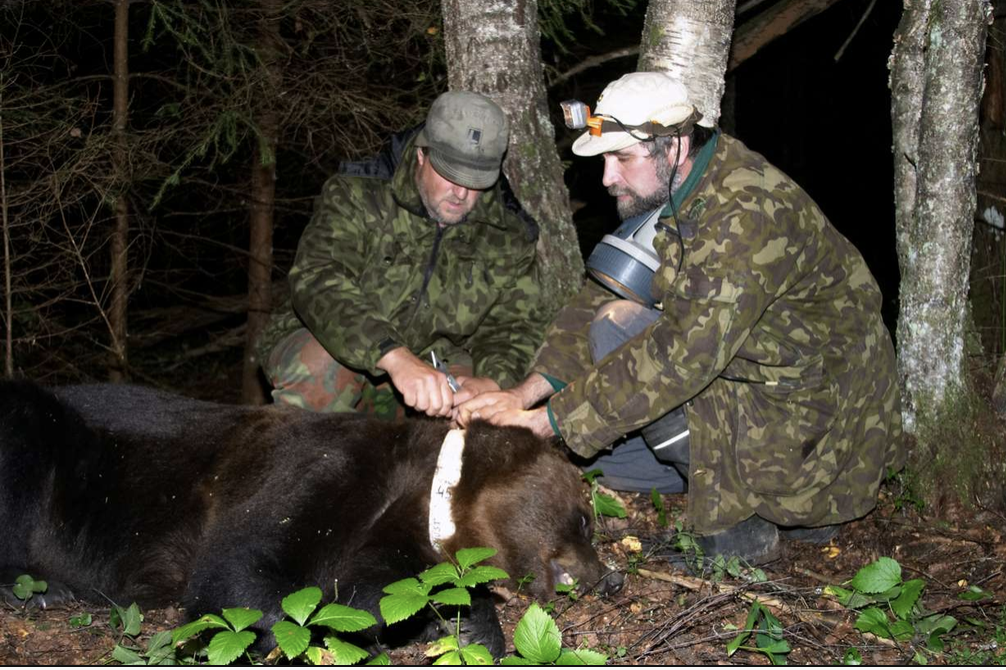
Two field researchers fit a collar to a sedated brown bear in a forest.
Harri Valdmann fitting a collar to a bear in 2005.

Our team has previous experience of collaring bears. You can read more about this bear telemetry project here.

Support the project

Questions and answers

FREQUENTLY ASKED QUESTIONS

1. Why GPS collars rather than cameras?

The study aims to determine the home-range size, daily movements and habitat selection of individual bears — in other words, where the same bear moves over time, how close it comes to settlements and when. This requires continuous tracking of identified individuals. A trail camera records a single location: it shows that a bear passed a certain point, but not which bear it was or where it is when outside the camera’s field of view. It therefore cannot reveal the animal’s home range, route or use of the landscape.

The state already has photographs and videos from hunters’ trail cameras, but no reliable way to distinguish the observations from one another. From 5,000 images, it is impossible to determine whether they show 1,000 different bears or repeated observations of the same individuals.

GPS telemetry provides information that cameras cannot. In countries with established wildlife telemetry programmes, it is a routine and necessary method: thousands of bears, wolves and lynx have been collared in Scandinavia, while almost none have been collared in the Baltic states. Our team previously collared one bear as part of a study, and that remains the extent of Estonia’s experience with bear telemetry. The state has not funded this work, although it has acknowledged the need. Scientists are therefore trying to begin with support from donors, in the hope that the state will continue the work.

2. Is this safe for the bears?

Each bear is anaesthetised by a veterinarian, who monitors its welfare throughout the collaring procedure. Bears are captured in a trap, which allows the team to assess the bear’s weight and general condition at close range and calculate the appropriate dose of anaesthetic more accurately. Trapping also prevents a sedated animal from escaping and keeps the procedure under control.

Bears that are unsuitable for collaring are not anaesthetised and are simply released from the trap. A bear wears the collar for approximately 4–5 years. Two-way satellite communication allows the team to activate the collar’s automatic drop-off mechanism remotely, so the bear does not need to be captured again to remove it. The collars are designed specifically for wildlife. The same model has been used in studies around the world and has demonstrated its reliability and safety.

3. Practical conservation benefits for the brown bear population

The main conservation value lies in reducing conflict through coexistence, because human actions and attitudes towards bears inevitably pose the greatest threat to the bear population. Knowing where, when and under what conditions bears approach areas used by people makes it possible to give specific advice on preventing conflict, such as the distance between silage bales and forest cover, the placement of hiking trails and electric fencing around apiaries. Fewer conflicts mean fewer bears killed as a result of conflict and greater public tolerance of the species. Both support the population’s long-term persistence.

The study will also provide Estonia-specific baseline data, including home-range size and habitat selection, that existing studies of smaller populations in different landscapes do not cover. It will provide a scientific basis for interpreting bear behaviour: whether a bear near a settlement is an anomaly or whether this is part of normal behaviour that may be important for survival and does not necessarily lead to conflict.

4. Could the results be used to set hunting quotas or make management decisions?

Bear hunting is governed by the European Union Habitats Directive, under which bears may not be hunted without valid justification and compliance with the conditions set out in the Directive. The study may provide information that helps the state plan bear-related measures more effectively, but setting hunting quotas and regulating bear management are not objectives of the study. The data are collected and managed by Tartu Ülikool researchers on our team.

5. Independent assessment and permits

The project is carried out by Tartu Ülikool scientists who are experts in the field. They have been granted a permit by Keskkonnaamet to capture and mark bears, which constitutes Keskkonnaamet’s approval of the study and confirmation of its ethical acceptability. The methodology is widely recognised and has been continually refined to reduce its impact on animals. The scientists leading the project have also completed the relevant training.

It is not possible to prevent every non-target animal from entering a trap, but cameras monitor the traps and the team responds immediately. If another animal is caught, it can be released as quickly as possible.

Only the researchers have access to precise data. Processed data and summaries will be shared with interested parties, but the bears’ exact locations will not be disclosed to unauthorised people.

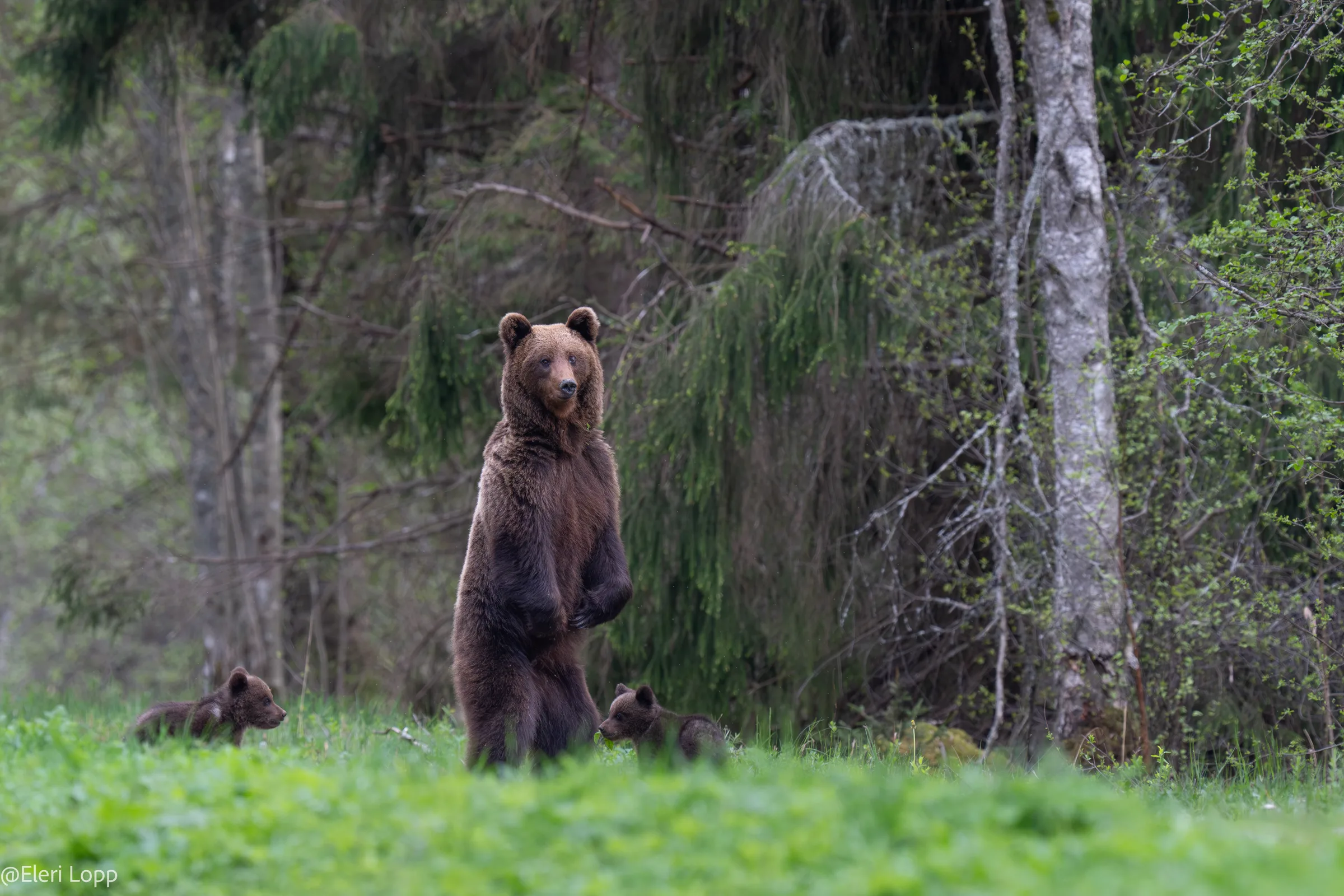
A mother brown bear stands upright in a forest with two cubs beside her.

Collaboration

Supporters and partners

  • Wildlife Dreams

    Donated the cost of the first collar through the Hooandja platform.

  • NaTourEst

    Donated one collar.

  • Chamäleon Stiftung

    Contributed 3,300 euros to the bear project.

Our supporters on Hooandja
  • Kärg Valner
  • Alina Priks
  • Tiit Jürisson
  • Mari Laanesaar
  • Ruta Kuusk
  • Jeffrey Carbillet
  • Merle Märs
  • Toomas Trapido
  • Kaile Eschbaum
  • Alvin Tarkmees
  • Maarja Mitt
  • Peeter Anijalg
  • Mihkel Väin
  • Liisi Peets
  • Richard Reintal
  • Aivo Oblikas
  • Kadri Lillemäe
  • Jane Rebane
  • David Stewart
  • Tuulike Mänd
  • Triinu Sepp
  • Tiia Salm
  • Kaia-Kaire Hunt
  • Merje Aru
  • Iida Elise Reiljan
  • Kersti Neufeld
  • Tanel Erich
  • Vlada Schotter
  • Jaak Aibast
  • Heiki H
  • Sandra-Liis Eensoo
  • Siiri Sarv
  • Jürgen Maidla
  • Maris Kruuse
  • Sharon Jõesaar
  • Madeleine Beutler
  • Kristel Altosaar
  • Anu Roht
  • Kaia Kukk
  • Piia Tomingas
  • Farištamo Eller
  • Brita Veimen
  • Angelika Neemelaik
  • Kristina Orion
  • Jaana Savolainen
  • Tanel Tarendi
  • Kristina Pahk
  • Ene Lainemäe
  • Kalle Pihelgas
  • Mari Kesküla
  • Grete Tõnisalu
  • Kadri Aller
  • Maarja Basihhina
  • Klaas Huwel
  • Sigrid Sünd
  • Heddi Jallai
  • Erik Mandre
  • Ants Tull
  • Ela Vulla
  • Carmen Kaljulaid
  • Karin Põldoja
  • Ustina Šamarina
  • William Lampart
  • Anni Petron
  • Agu Leivits
  • Jaan Lendsaar
  • Taimi Kõnn
  • Jaanus Remme
  • Tiiu Rosenberg
  • Ursula Vent
  • Monika Molodost
  • Argen Vulla
  • Kaia Beilmann
  • Aire Vares
  • Tavo Kikas
  • Kaia Konsap
  • Angela Kristian
  • Eva Kuuskla
  • Marika Maidla
  • Kai Toome
  • Tõnis Ruber
  • Maiu Vahkal
  • Heli Täpsi
  • Riin Viigipuu
  • Helen Hirv
  • Jüri-Ott Salm
  • Külli Relve
  • Argo Argel
  • Otto Mättas
  • Jane Jakobson
  • Agne Rääbis
  • Auli Veske
  • Eva-Maria Lass
  • Katrin Tootsen
  • Sirje Peterson
  • Katrin Riik
  • Riia Ränisoo
  • Monika Pärnsalu
  • Evelin Tamm
  • Triin Tekko

and 30 anonymous supporters

In the media

Media coverage